This section will draw heavily on The Handbook of Tibetan Buddhist Symbols by Robert Beer. From reading Mr Beer I have learnt that Tibetan symbols have their origin in Indian Buddhist symbols. This is because Tibetan Buddhism itself originated from India, after Indian Buddhism was destroyed around the end of the 12th Century and the dharma travelled to Tibet. Buddhist symbols themselves often turn up in art belonging to different cultures; the Endless Knot may be found in Islamic or Celtic art, for example.
Mudras
“Mudra” is a Sanskrit term that means ritual hand gestures that may be made by Buddha figures.
The Boon-Granting Gesture
(Skt. varada-mudra; Tib. mchog-sbyin-gyi phyag-rgya)

The boon-granting gesture is also known as the gesture of generosity. It represents “open-handed” generosity of the granting of wishes. This gesture is usually made with the right-hand.
The Earth-Touching Gesture
(Skt. bhumyakramana; Tib. sa-gnon)
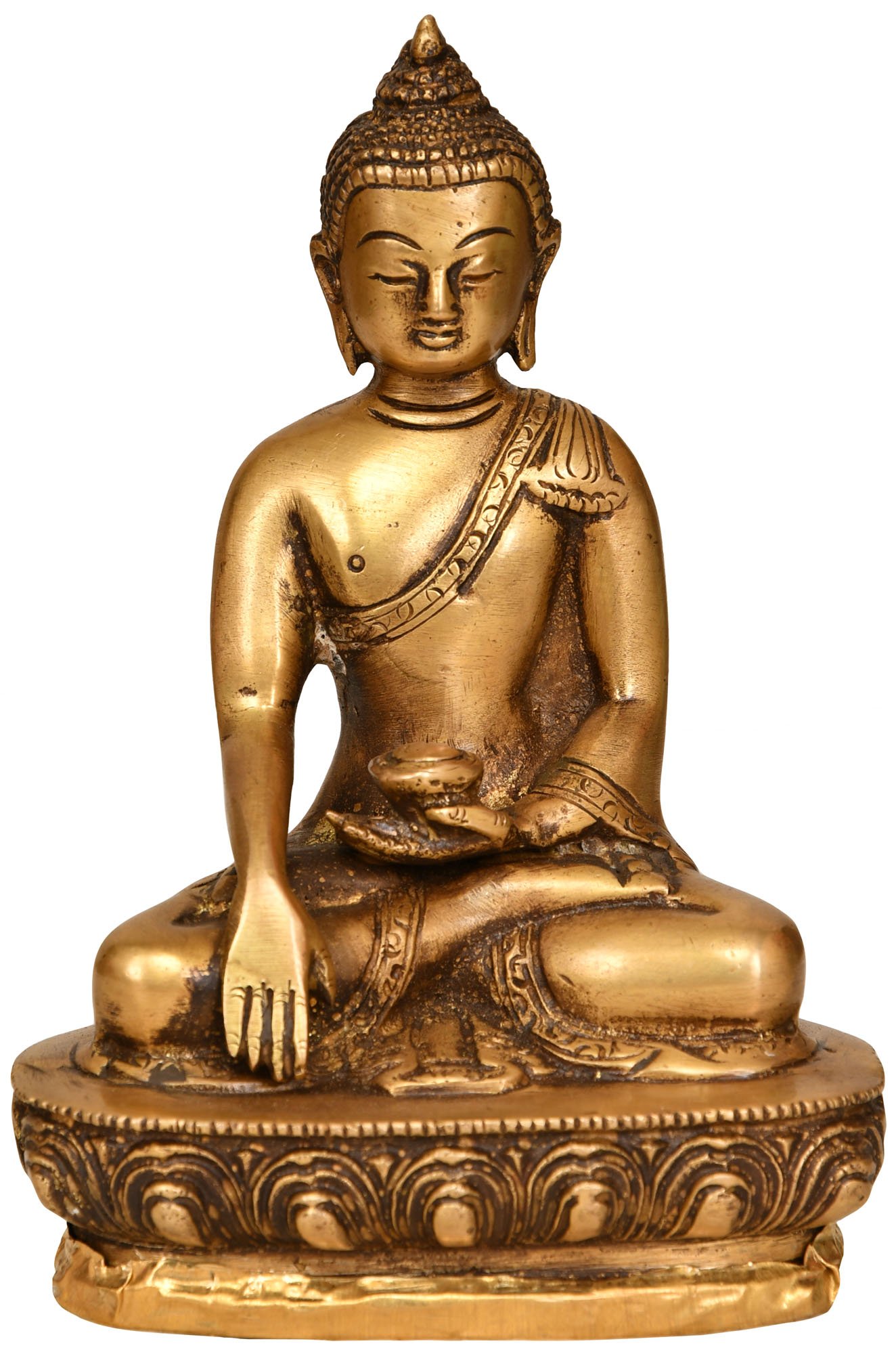
In this gesture the right hand of the Buddha reaches down to touch the ground with its fingertips. His left hand rests in meditation. This mudra refers to the moment when, assailed by the forces of Mara, the Buddha asks the Earth to bare witness to his right to sit on the enlightenment throne. The Earth Goddess was then said to appear to in response. It is this mudra that am personally find most powerful.
This mudra is also attributed to Akshobya, the blue Buddha.
The Protection Gesture
(Skt. abhaya-mudra; Tib. mi-‘jigs-pa’i ohyag-rgya)
This gesture is the mudra of protection, or of fearlessness and also of giving refuge. The right hand points upwards, with palm facing outwards, and fingers extending upwards and it usually rests in front of the heart. With this mudra the Buddha offers protection from all the fears of cyclic existence. It is also associated with the green Buddha of the North, Amoghasiddhi.
 Mindful Writing